
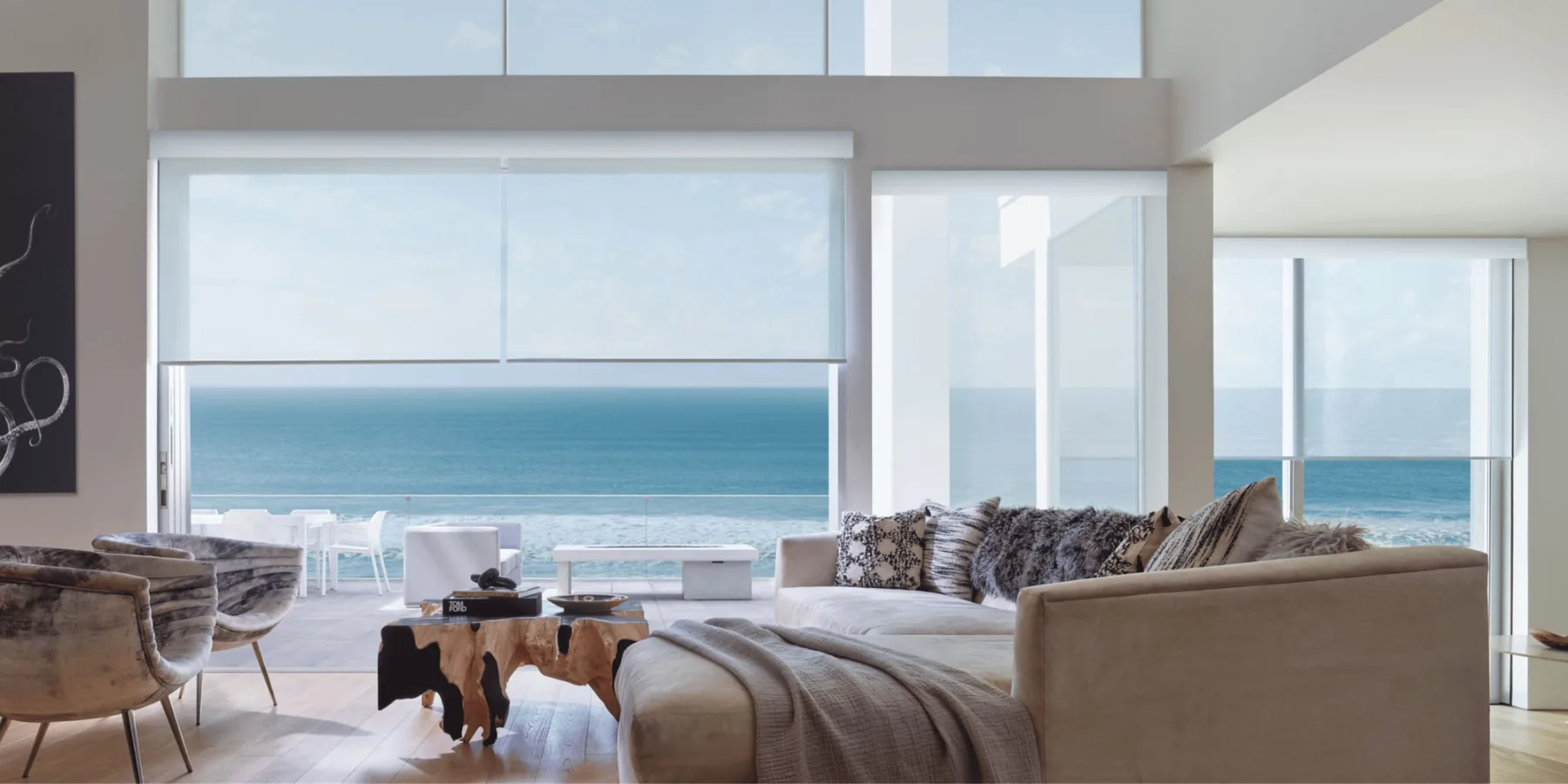
A wide living room window, a tall picture window and a wall of glass can each need a different approach. The right window treatment depends on the light coming in, the privacy you want and how you’d like to use the windows each day.
At John Crawford Company, we help you compare Hunter Douglas and Alta window treatments with those details in mind. Fabric and color are part of the choice. So are the arrangement, the controls and where the treatment will sit when it’s open.
Start with what you want to change about the room
Think about when your windows give you the most trouble. Afternoon sun might put glare across the television. A room that feels private during the day may feel exposed after dark. Or you may like the daylight and simply want to soften it.
Those situations call for different fabrics and levels of coverage.
If keeping the view is a priority, screen shades are worth considering. Their woven fabrics let you see through to varying degrees while filtering sunlight. Privacy changes with the lighting, though. When the room is lit at night, people outside may be able to see in. We’ll help you consider whether you need another layer for evening privacy.
For a bedroom, discuss how dark you want the room to feel. Light coming through the fabric and light entering around its edges are separate things. The mounting arrangement and coverage matter alongside the fabric you choose.
Compare one wide shade with several smaller shades
A large opening doesn’t always need one treatment across its entire width.
One wide shade gives you a continuous area of fabric. Several shades let you adjust different parts of the window separately. For example, you might lower the shade where the sun hits your seating area and leave the others open.
Window divisions can help guide the arrangement. On a row of three windows, individual shades may follow the frames naturally. Across one broad picture window, you’ll want to consider where the divisions between shades would fall.
Alta offers a two-on-one headrail arrangement for selected roller shades, allowing two shades to operate independently while sharing a continuous headrail. We can compare that approach with separate treatments and a single shade, depending on the opening and selected product.
Width, height, fabric and operating system all affect the available sizes. We check those details together when reviewing your windows.
Choose a treatment that suits the opening
Roller and screen shades
Roller shades are a good starting point if you prefer a simple fabric treatment with little visual detail. Hunter Douglas Designer Roller Shades and Alta Roller Shades offer different fabrics and light-control choices.
Screen shades deserve a closer look when glare and the view are central to the decision. With a large area of glass, compare samples at the window so you can judge how clearly you can see outside and how much light comes through.
Honeycomb shades
Honeycomb shades, also called cellular shades, are worth comparing when comfort is a concern. Their cellular construction traps air at the window, adding insulation.
Hunter Douglas Duette shades and Alta Honeycomb Shades offer different fabric and operating choices. We’ll help you compare the light control you want and the configurations available for your opening.
Treatments that move from side to side
For a wide opening or sliding glass door, consider whether a treatment that travels sideways would be easier to use.
Hunter Douglas Luminette Sheer Panels combine sheer fabric with adjustable vertical vanes. Alta Panel Track shades use broad fabric panels that glide across the opening. They have different appearances and ways of controlling light, so seeing them operate can help you decide which you prefer.
If the opening includes a door, the treatment also needs to gather where it allows comfortable access.
Compare Hunter Douglas window treatments for large windows
| Product | Why consider it | Light and privacy | What to plan for |
|---|---|---|---|
| Designer Roller Shades | A simple fabric treatment that keeps the window’s appearance uncluttered. | Fabrics range from sheer to opaque, with different levels of light control and privacy. | Compare one wide shade with several smaller shades. Consider light entering around the fabric’s edges. |
| Designer Screen Shades | Controlling glare while keeping a view outside. | Fabric openness affects visibility and light control. View-through fabrics may need another layer for nighttime privacy. | Compare samples at the window to judge the view and privacy you’ll have. |
| Duette® Honeycomb Shades | Adding insulation at a large area of glass. | Light-filtering and room-darkening fabric choices suit different rooms. | Compare the shade’s pleated appearance and how much glass it covers when raised. Selected configurations also open sideways for doors. |
| Luminette® Sheer Panels | A soft, drapery-like appearance across wide windows or sliding doors. | Rotating fabric vanes let you adjust light and privacy while the sheer fabric softens daylight. | Allow space for the treatment to gather at the side when open. |
| Skyline® Panel-Track Blinds | Broad fabric panels with a contemporary look for wide or tall openings. | Fabric opacity determines how much light comes through and how much privacy the panels provide. | Panels glide sideways and stack together. Their resting position should work with the view, furniture and door access. |
Available sizes, fabrics and controls vary by configuration. We’ll measure your opening and help you compare the combinations that fit your windows.
Look at the window treatment when it’s open
It’s easy to focus on how a treatment looks across the glass. Give some attention to where it goes when you open it.
A raised shade occupies space at the top of the window. Drapery and sliding panels gather at the sides. The amount of space they use affects how much glass remains visible.
With drapery, we look at the rod or track, the fabric fullness and where the panels will rest. Stationary side panels can frame the window, while a shade handles the everyday light control. Curtains that close across the opening need their own allowance for coverage and movement.
Window depth, handles, trim and nearby furniture also affect the fit. These details are part of measuring for the complete treatment.
Choose controls you’ll be comfortable using
Large windows often put controls out of easy reach, especially behind furniture or above a stairway.
Motorized operation lets you adjust compatible treatments without reaching each window. We work with Hunter Douglas PowerView and Somfy systems, and can explain the controls available with the shades you’re considering.
Power deserves attention too. With a rechargeable system, consider how you’ll reach the charging connection. For a hardwired installation, the power connection needs to be coordinated with the selected system. We’ll talk through those requirements as part of the product choice.
Compare samples beside your own windows
A fabric sample can look different against a bright window than it does on a table. Seeing it in your room helps you judge the color, texture and light coming through it.
During a free in-home consultation, we bring samples, take measurements and help you compare suitable options within your budget. You can also arrange an appointment at our Woodland Hills showroom.
Call (818) 884-5464 to talk about your windows or request a visit.